







钢丝刷
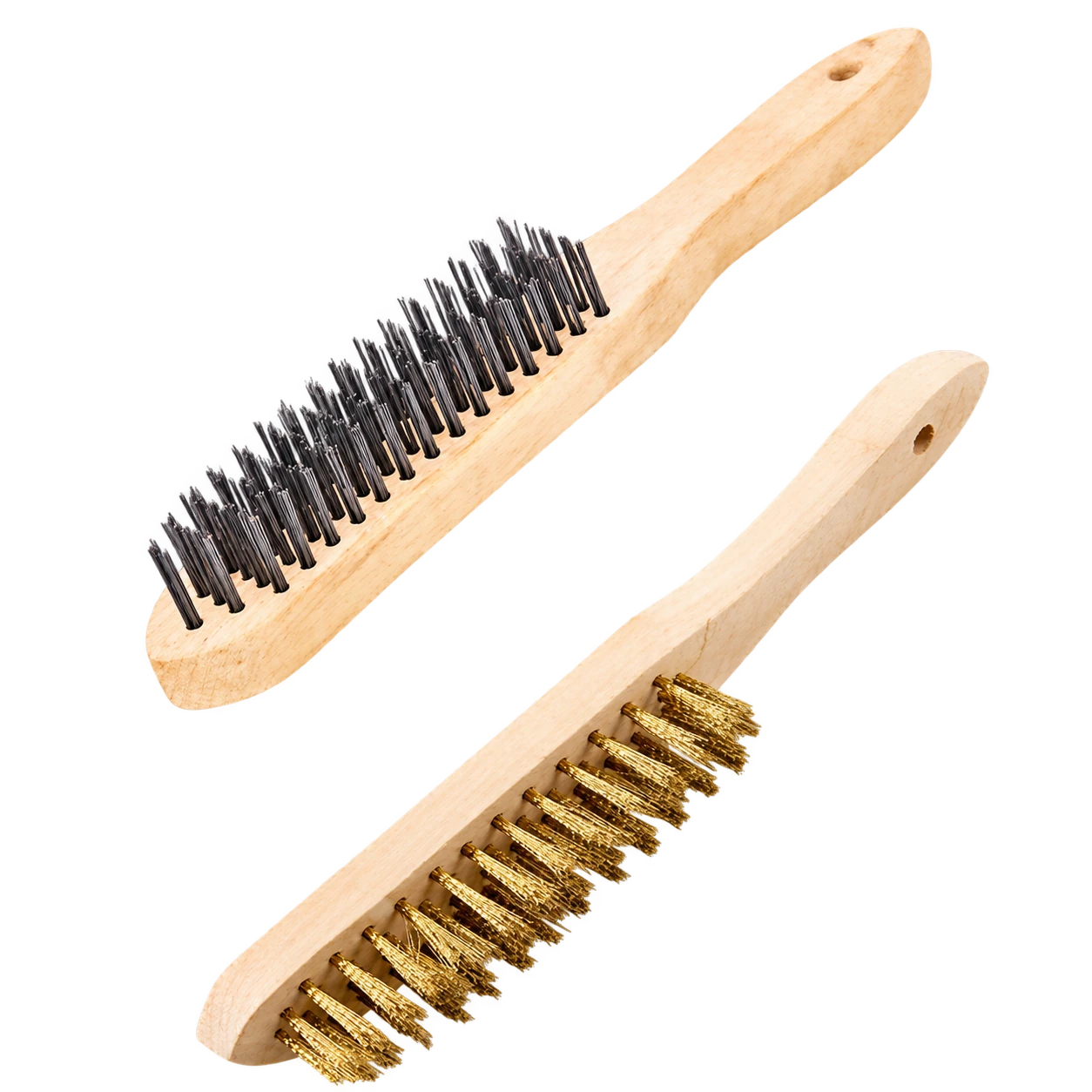
Stanvac International WIRE BRUSHES are wooden-handled hand brushes for cleaning weld preparations and removing slag, scale and spatter after welding. Three wire types are offered — stainless steel, mild steel and brass — each in 2-row and 4-row versions.
产品详情
Key Features and Benefits of Wire Brush
- Three Wire Types: Stainless steel for stainless work, mild steel for general cleaning, brass for softer metals.
- 2-Row and 4-Row: 2-row brushes for tight joints, 4-row for faster cleaning over larger areas.
- Wooden Handle: A shaped wooden handle stays comfortable and does not conduct heat.
- Consistent 290mm Length: All models share a 290mm overall length for a predictable reach.
- No Cross-Contamination: Keeping a dedicated stainless brush prevents carbon steel pickup on stainless welds.
Specifications of Wire Brush
The table below lists the models available in the Wire Brush range.
| Brush Type | Row | Length (mm) | Width (mm) | Height (mm) |
|---|---|---|---|---|
| Wooden Handle + Stainless Steel Wires | 2 | 290 | 25 | 15 |
| Wooden Handle + Stainless Steel Wires | 4 | 290 | 30 | 15 |
| Wooden Handle + Mild Steel Wires | 2 | 290 | 25 | 15 |
| Wooden Handle + Mild Steel Wires | 4 | 290 | 30 | 15 |
| Wooden Handle + Brass Wires | 2 | 290 | 25 | 15 |
| Wooden Handle + Brass Wires | 4 | 290 | 30 | 15 |
Applications of Wire Brush
- 制造和焊接车间
- 施工和现场安装工作
- 工厂维护和维修作业
- 培训中心和工具室
常见问题解答
What are welding wire brushes used for?
Three jobs: cleaning the joint before welding, removing slag and spatter residue between passes, and cleaning the weld afterwards. Of the three, cleaning between passes matters most for weld quality — slag left on a pass is trapped in the next one and shows up as an inclusion in radiography.
Can a stainless brush be used on carbon steel?
Technically yes, but it defeats the purpose of keeping a dedicated stainless brush — once it has been used on carbon steel it carries carbon steel contamination and can no longer be trusted on stainless. Shops that take stainless seriously keep the two sets in different places, not just different racks.
What is the difference between crimped and twisted-knot wire brushes?
Crimped wire is softer and more flexible, which suits light cleaning, finishing and surfaces you do not want to scratch. Twisted-knot wire is stiffer and far more aggressive, for heavy scale, rust and slag removal. Using a knot brush where a crimped one belongs removes more material than intended; the reverse simply takes longer.
What safety precautions apply to power wire brushes?
Bristles break off and are thrown at speed — eye and face protection is essential, not optional, and a face shield over safety glasses is the right level for knot brushes. Do not exceed the brush's maximum rated speed, inspect for missing bristles before use, and keep the guard fitted.
When should a wire brush be replaced?
When the bristles have worn short enough that the brush is being pressed harder to work, which bends and breaks bristles faster and gives a poorer clean. A worn brush costs more in time and thrown bristles than a new one costs to buy.
让我们一起找到适合您的焊接解决方案。
请告诉我们您的需求,我们将帮助您迈出下一步。