








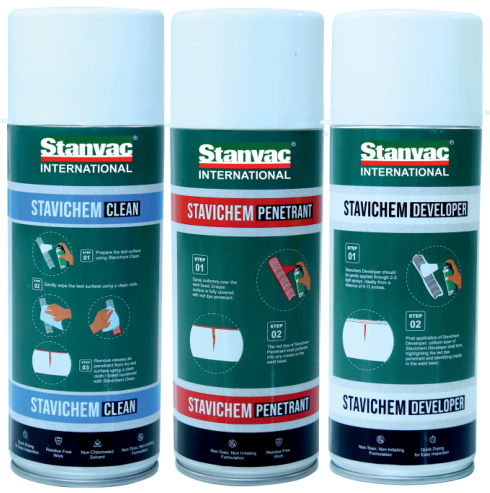
DPT SET - STAVICHEM CLEAN, STAVICHEM PENETRANT, STAVICHEM DEVELOPER
The DPT (dye penetrant test) is a key non-destructive testing (NDT) method for finding surface defects in metals and other non-porous materials, and a DPT test kit contains everything needed to carry it out. Also called a DPT set or DPT dye penetrant test kit, it reveals cracks, seams, porosity and other surface discontinuities that ordinary visual inspection can miss. Such kits are common in welding, fabrication, automotive manufacturing and heavy engineering. Because they allow fast, dependable defect detection, DPT test kits support product quality, operational safety and compliance with industrial inspection standards.
Product details
Key Features and Benefits
A DPT dye penetrant test kit has several features that make it a dependable, efficient inspection tool in many industries. They allow accurate defect detection while keeping inspection simple and economical
Precise Detection of Surface Defects
A DPT set is built to pick up surface flaws such as cracks, seams, porosity, laps and cold shuts. For welded structural components, a DPT test for welding is particularly useful, because these defects can weaken the structure if they go unnoticed.
Highly Sensitive Inspection
A major strength of a DPT test kit is that it can reveal very small defects. The penetrant shows surface flaws whose depth is roughly 1 micron to 30 microns
Easy Three-Step Procedure
Most DPT dye penetrant test kits use a simple three-stage system made up of a cleaner, a penetrant and a developer, so inspection is fast and straightforward
Safe, Non-Corrosive Chemicals
The chemicals in a standard DPT set are generally non-corrosive and are intended to be safe for the operator and for the material being inspected
Specifications
The technical specifications of a DPT test kit support dependable performance during inspection. They describe how the kit works and which applications it covers
| Parameter | Description |
| Product Type | Dye penetrant inspection kit used for non-destructive testing |
| System Components | Cleaner, penetrant, and developer included in the DPT set |
| Cleaner Type | Fast-drying solvent cleaner used for surface preparation |
| Penetrant Type | High-visibility red dye penetrant designed for strong capillary action |
| Developer Type | Non-toxic developer that draws penetrant from defects |
| Detection Range | Capable of identifying surface defects from approximately 1–30 microns in depth |
| Material Compatibility | Suitable for metals, plastics, ceramics, and other non-porous materials |
| Packaging | Typically supplied in aerosol spray cans for convenient application |
With these specifications, DPT dye penetrant test kits are well suited to precise inspection and quality control in many industries
Properties
Several chemical and physical properties determine how well a DPT set performs. They let inspectors find defects accurately while handling the products safely and getting reliable results
Strong Capillary Penetration
In a DPT check, the penetrant in the kit has strong capillary action, so it draws into extremely fine cracks and surface discontinuities
Quick Surface Cleaning
The cleaner supplied with DPT dye penetrant test kits removes oil, grease and contaminants before testing, which keeps inspection results accurate
Defects Clearly Shown
The developer draws penetrant out of defects and up to the surface, producing visible indications that inspectors can spot easily
Broad Material Compatibility
A good-quality DPT set works well on ferrous and non-ferrous metals and on certain plastics and ceramics
Safe Composition
Most DPT test kits are formulated to be non-toxic and non-corrosive, which suits industrial inspection settings
Related Products
A number of industrial products are frequently used with a DPT test kit to improve inspection and welding quality control
Welding Electrodes: Electrodes for strong, dependable welds in fabrication and structural work
MIG and Flux-Cored Welding Wires: Wires made for smooth, efficient automated welding
Hardfacing Electrodes: Specialised electrodes that build wear-resistant surfaces on industrial components
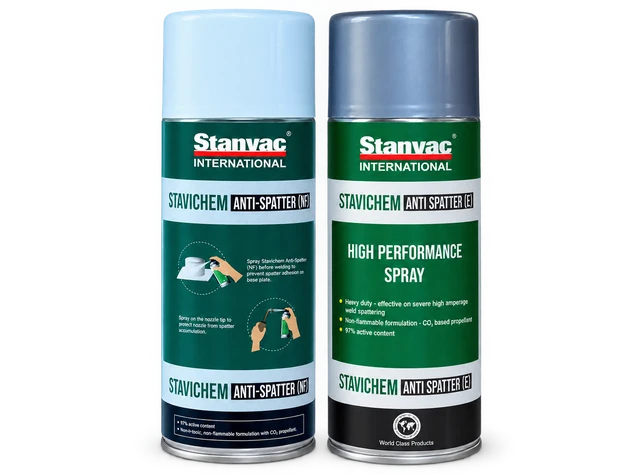
Anti-Spatter Spray: A protective spray that keeps weld spatter from sticking to metal surfaces These products work hand in hand with DPT dye penetrant test kits, helping industries maintain high welding standards and dependable inspection procedures
How a DPT Test Works
The DPT test is a simple three-step procedure. The surface is first cleaned with the solvent cleaner to strip away oil, dirt and contaminants. The red dye penetrant is then applied and left to dwell, during which it enters any surface cracks or flaws by capillary action. After the excess penetrant is wiped off, the white developer goes on. Any defects show up as red marks against the white developer, which makes them easy to see. This is the usual routine for a DPT test for welding, where post-weld inspection confirms joint integrity before the part enters service.
Frequently Asked Questions
What does DPT stand for in the DPT test?
DPT stands for Dye Penetrant Test. It is a non-destructive testing (NDT) method for finding surface-level cracks, porosity and other discontinuities in metals, plastics and ceramics.
How do you carry out a DPT test for welding?
For a DPT test for welding, you clean the weld surface, apply a red dye penetrant, allow it to dwell, remove the excess penetrant and then apply a white developer. Surface defects appear as red marks on the white background and point to cracks or incomplete fusion in the weld.
What does a DPT test kit contain?
A standard DPT test kit holds three aerosol spray cans: a solvent cleaner to prepare the surface, a red dye penetrant to detect defects and a white developer to make the indications visible. The DPT SET - STAVICHEM CLEAN, STAVICHEM PENETRANT, STAVICHEM DEVELOPER includes all three components.
At what point should a DPT check be done?
Carry out a DPT check after welding, machining, grinding or any other process that might create surface defects. It is also used in routine maintenance inspections and before components go into service in safety-critical applications.
Which materials can a DPT set be used on?
A DPT set suits any non-porous material, including carbon steel, stainless steel, aluminium, copper, brass, titanium, ceramics and certain plastics. It should not be used on porous materials such as unglazed ceramics or untreated wood.
Let’s find your welding solution.
Share your requirements. We’ll help you take the next step.