





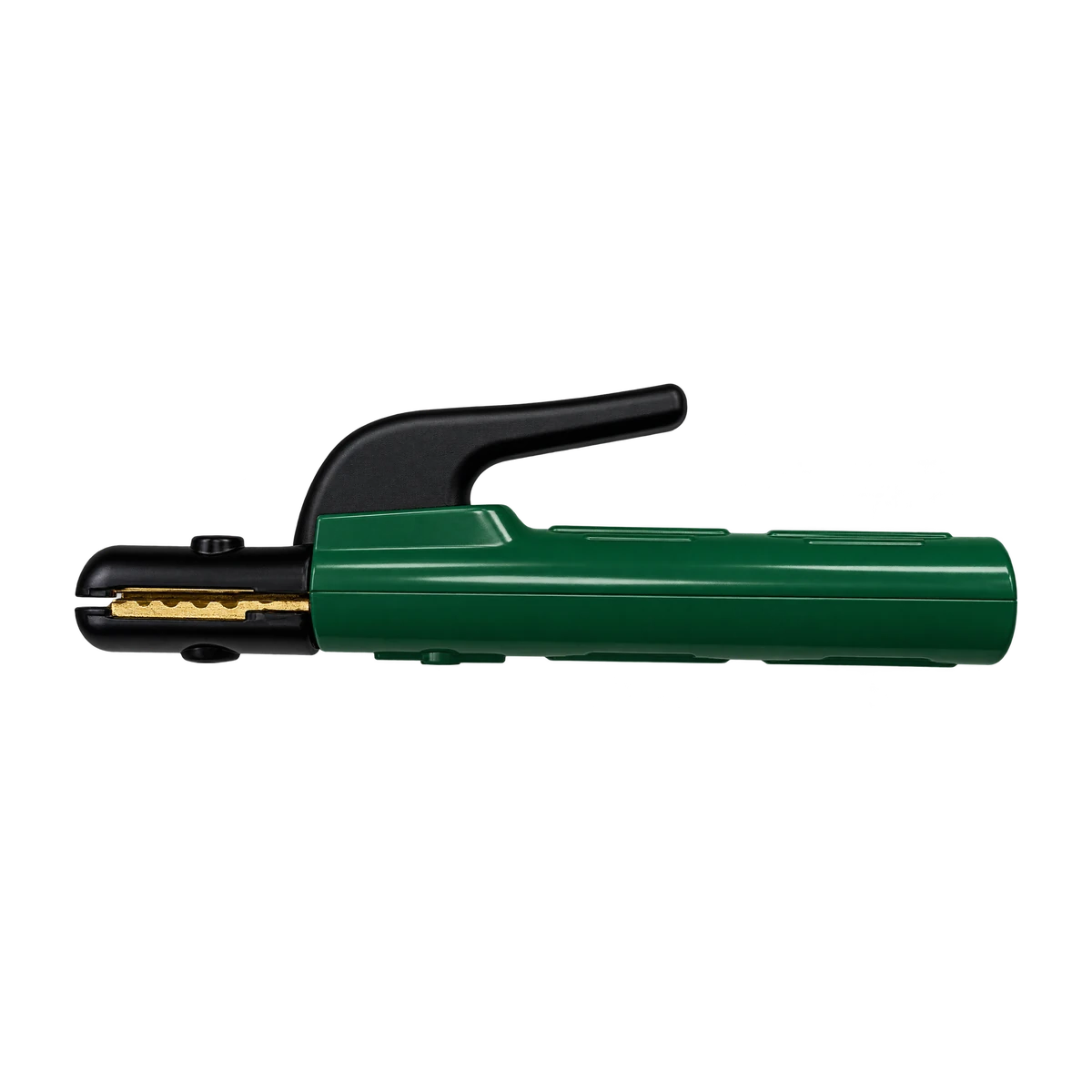
STAVI GREEN ELECTRODE HOLDERS
The STAVI GREEN ELECTRODE HOLDERS are general-purpose arc welding holders offered in 200A, 400A and 600A ratings. The fully insulated brass handle gives a secure, comfortable grip, while the jaw geometry holds the electrode firmly at every standard working angle.
Product details
Key Features and Benefits of STAVI GREEN Electrode Holder
- Three Practical Ratings: 200A, 400A and 600A cover light fabrication through to heavy welding.
- Fully Insulated Handle: Insulated body protects the operator and stays comfortable in continuous use.
- Secure Electrode Grip: Jaws hold electrodes up to 10.0mm firmly, reducing slippage and arc interruption.
- Stable Current Flow: A low-resistance current path keeps the arc steady and limits heat build-up.
- Safety Compliant: Manufactured in line with EN IEC 60974-11 and meets CE standards.
Specifications of STAVI GREEN Electrode Holder
The table below lists the models available in the STAVI GREEN Electrode Holder range.
| Amp Capacity | 200 | 400 | 600 |
|---|---|---|---|
| Cable Capacity | #3 (35mm²) | 2/0 (70mm²) | 3/0 (95mm²) |
| Electrodes Up to | 4.0mm | 8.0mm | 10.0mm |
Applications of STAVI GREEN Electrode Holder
- Manual metal arc (SMAW) welding in fabrication shops
- Structural steel and heavy engineering fabrication
- Shipyard, refinery and power plant maintenance welding
- On-site repair, maintenance and erection work
Frequently Asked Questions
How is the STAVI Green electrode holder different from the STAVI Lite?
Both sit in the Stanvac International welding electrode holder range and both are built to the same safety construction. The difference is duty class: choose the model whose current rating and weight match how long the welder holds it and at what amperage. Lighter construction suits extended-duty and positional work at moderate current; heavier construction suits continuous high-current welding where jaw life matters more than hand weight.
Can this holder be used for overhead and vertical welding?
Yes. The jaw is grooved to clamp the electrode at multiple fixed angles — typically 45°, 90°, 135° and 180° — so the welder can set the rod to suit flat, horizontal, vertical and overhead positions without changing holders. In overhead work the practical constraint is usually holder weight rather than the jaw, since the welder is supporting it against gravity for the length of the run.
What welding cable size does the STAVI Green connect to?
Indian industrial holders in the 400–600A class are normally specified for 50 mm², 70 mm² or 95 mm² welding cable through a lug-type connection at the rear of the handle. Under-sizing the cable is a common site error — it causes voltage drop and heats the connection at the holder even when the holder itself is correctly rated.
Is the STAVI Green suitable for Railways, PSU and government tenders?
Indian institutional tenders for manual metal arc welding accessories generally reference IS 2641, and many ask specifically for ISI-marked holders. Where a CE or export specification is required, the equivalent is EN 60974-11. Ask the Stanvac International sales team for the current test certificate and marking details when preparing a tender submission.
What does the amperage rating on an electrode holder actually mean?
It is the maximum current the holder is designed to carry continuously at its rated duty cycle — not a momentary peak. A 400A holder run at 400A for short bursts behaves differently from one run at 400A all shift. Specify against your machine's maximum output and the duty cycle you actually weld at, and allow headroom if the work is continuous production rather than intermittent repair.
How should an electrode holder be maintained?
Keep the jaw grooves clean of slag and spatter so the rod seats fully — a partially seated rod arcs at the jaw and burns it. Check the cable lug at the rear of the handle is tight; a loose connection heats up and is the commonest cause of a holder that seems to overheat. Keep the holder off wet ground and out of standing water. Do not use it as a hammer to knock slag off, which is what usually cracks the jaw insulator.
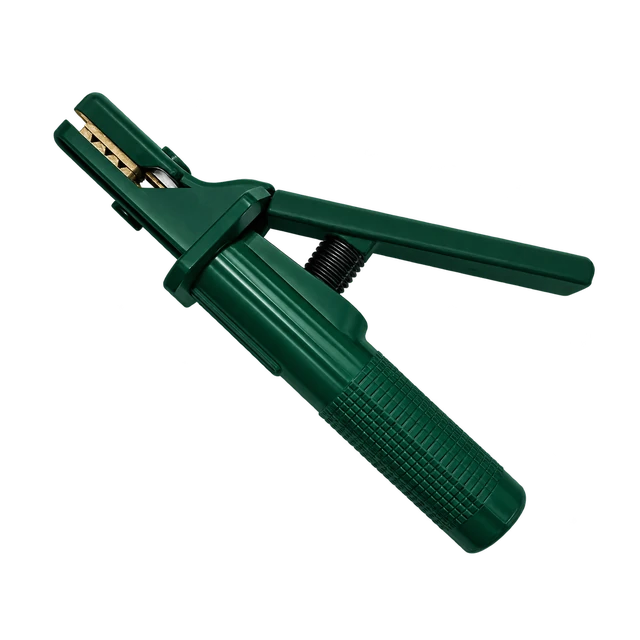
STAVI LITE ELECTRODE HOLDERS
View details →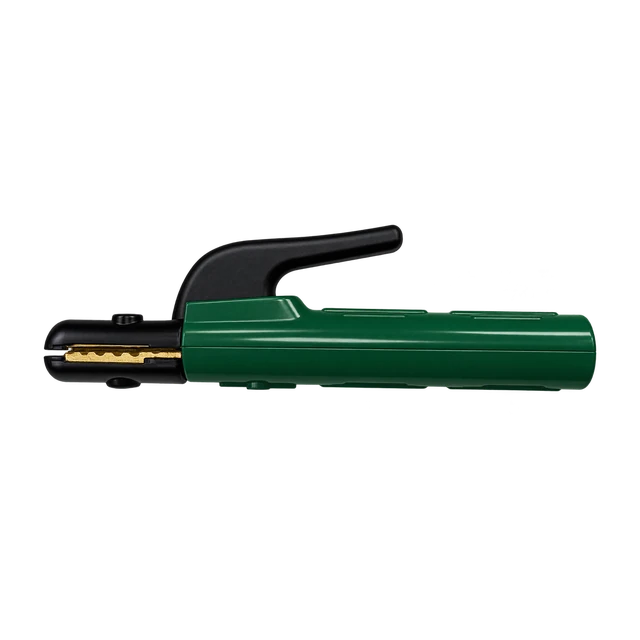
STAVI STEEL ELECTRODE HOLDERS
View details →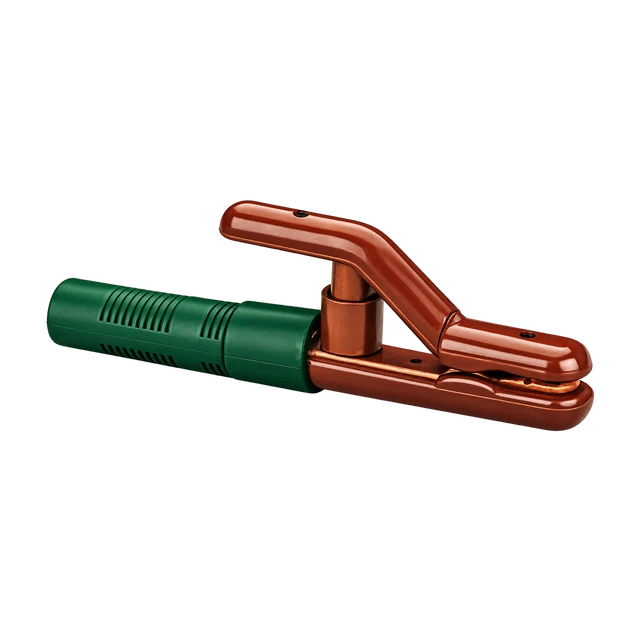
STAVI J ELECTRODE HOLDERS
View details →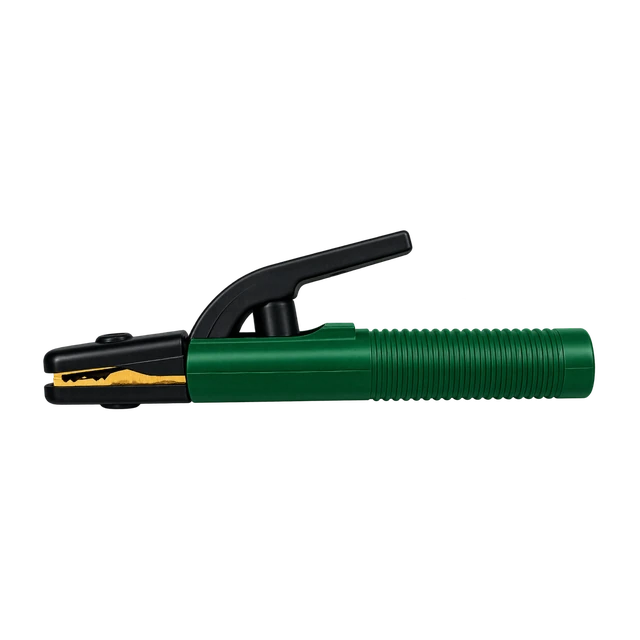
STAVI L ELECTRODE HOLDERS
View details →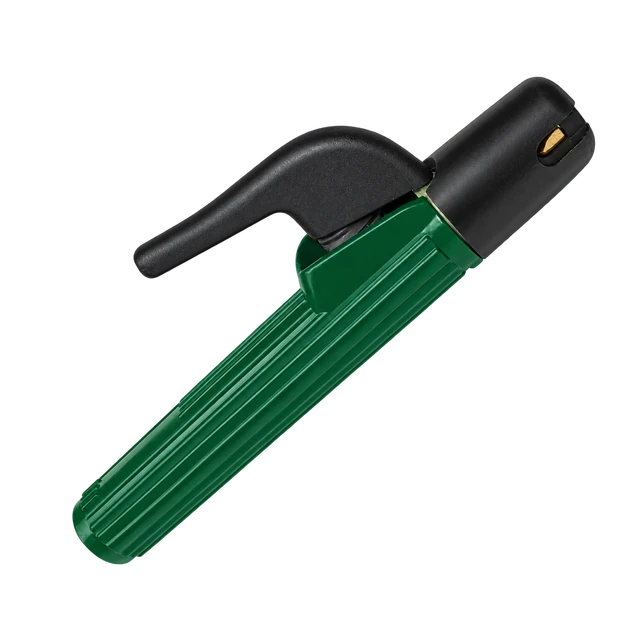
STAVI OPT ELECTRODE HOLDERS
View details →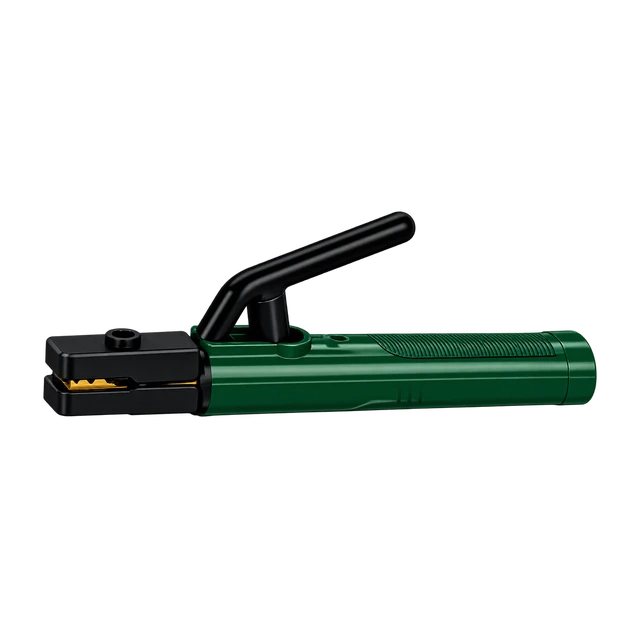
STAVI GERMAN ELECTRODE HOLDERS
View details →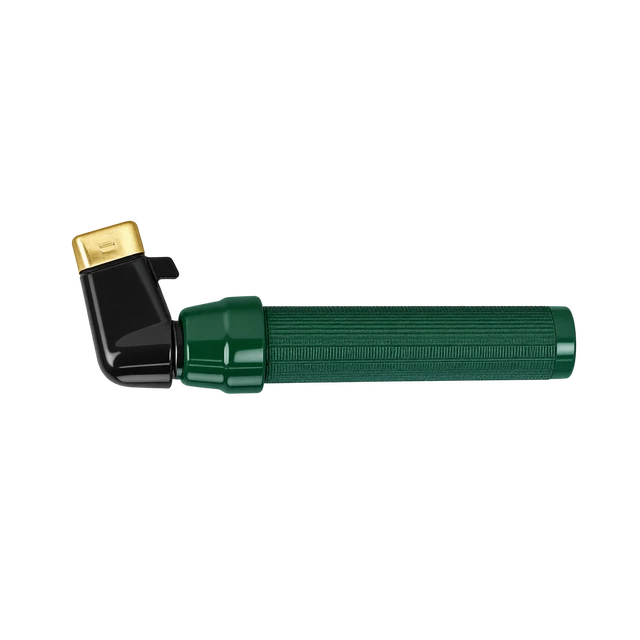
STAVI TWIST ELECTRODE HOLDERS
View details →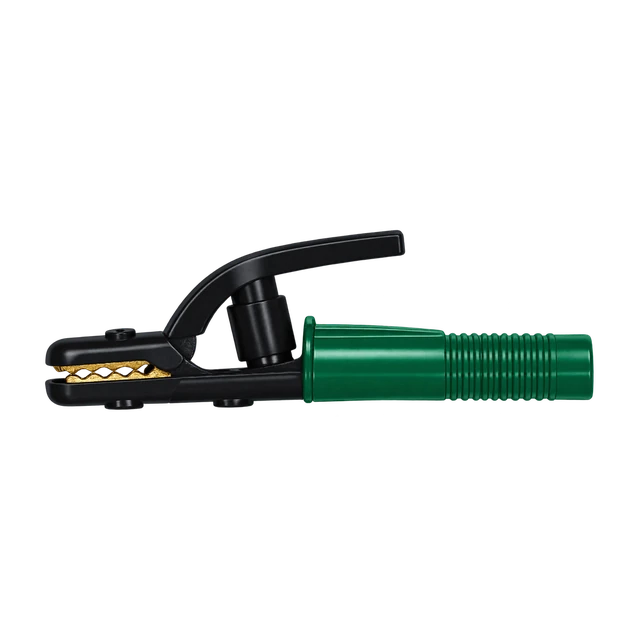
STAVI T ELECTRODE HOLDERS
View details →Let’s find your welding solution.
Share your requirements. We’ll help you take the next step.