








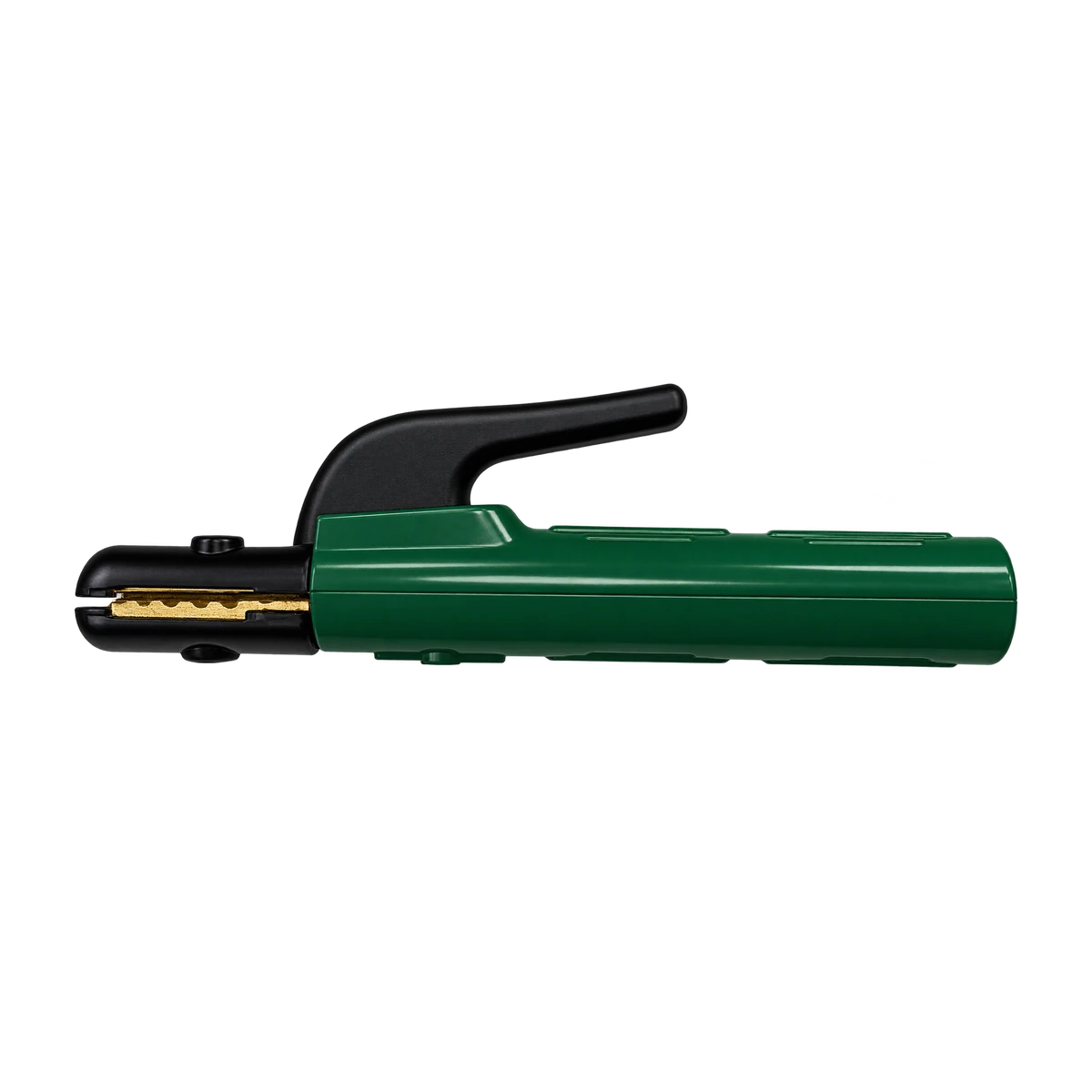
STAVI STEEL ELECTRODE HOLDERS
The STAVI STEEL ELECTRODE HOLDERS are heavy-duty holders offered in 400A and 600A ratings for demanding fabrication and maintenance welding. Built for sustained high-current work, they accept electrodes up to 10.0mm and cable up to 3/0 (95mm²).
Product details
Key Features and Benefits of STAVI Steel Electrode Holder
- Heavy-Duty Ratings Only: Supplied in 400A and 600A for sustained high-current welding.
- Large Electrode Capacity: Handles electrodes up to 10.0mm on the 600A model.
- Robust Construction: Built to survive drops, heat and rough handling on site.
- Efficient Current Transfer: Low-resistance jaws and cable connection reduce voltage drop and heating.
- Safety Compliant: Manufactured in line with EN IEC 60974-11 and meets CE standards.
Specifications of STAVI Steel Electrode Holder
The table below lists the models available in the STAVI Steel Electrode Holder range.
| Amp Capacity | 400 | 600 |
|---|---|---|
| Cable Capacity | 2/0 (70mm²) | 3/0 (95mm²) |
| Electrodes Up to | 8.0mm | 10.0mm |
Applications of STAVI Steel Electrode Holder
- Manual metal arc (SMAW) welding in fabrication shops
- Structural steel and heavy engineering fabrication
- Shipyard, refinery and power plant maintenance welding
- On-site repair, maintenance and erection work
Frequently Asked Questions
What is a steel-bodied welding electrode holder, and where is it used?
A steel-bodied holder uses a steel main body in place of the forged brass or copper alloy used in premium holders, with the current-carrying contact surfaces and jaw still made of a conductive alloy. It is specified where holders are treated as consumable site equipment — general fabrication, construction, repair shops and anywhere holders are lost, dropped or damaged often enough that replacement cost matters more than service life.
Does a steel body conduct welding current as well as brass or copper?
Steel has lower electrical conductivity than brass or copper, which is why the current-carrying path and the jaw contact faces are what determine performance, not the body shell. In a correctly designed holder the steel body provides mechanical strength while the conductive components carry the current. What to avoid is a holder where steel is carrying current across a long path — that is where resistive heating shows up at the handle.
Is a steel-bodied electrode holder safe to use?
Safety comes from the insulation, not the body material. A fully insulated holder encloses every current-carrying part. What does matter with a steel body is inspecting the insulation more carefully, because a cracked or charred cover over a steel body is a more direct path to the welder's hand than the same crack over an insulated brass one.
Why does welding spatter stick to a steel holder more, and does it matter?
Spatter adheres more readily to a steel surface than to brass. It is cosmetic on the body, but on the jaw grooves it is not — built-up spatter stops the rod seating fully, which causes arcing at the jaw and burns the contact faces. Clean the grooves regularly with a wire brush; that single habit does more for holder life than any material choice.
Should I choose a steel or a brass electrode holder for my workshop?
Choose steel where holders are exposed, replaced often and cost is the deciding factor — construction sites, contract fabrication, training workshops. Choose forged brass where the holder stays with one welder in a controlled shop, runs at high current, and jaw life over thousands of rods matters more than unit price. Many fabrication units run both, matched to the work rather than standardised across the plant.
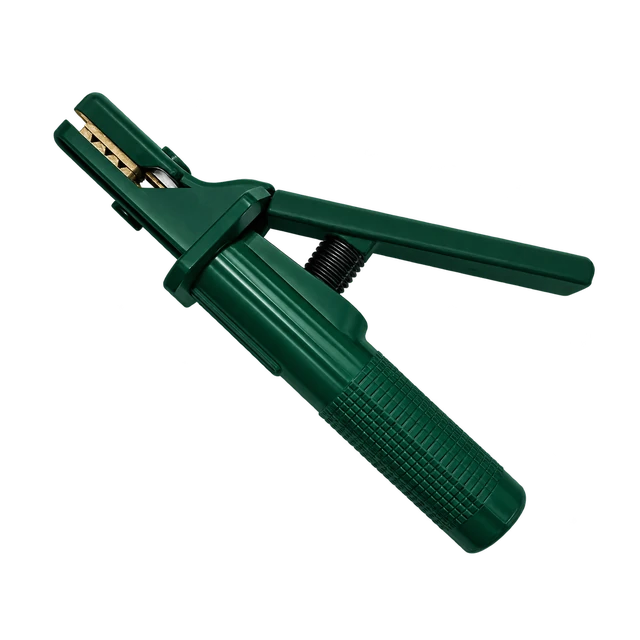
STAVI LITE ELECTRODE HOLDERS
View details →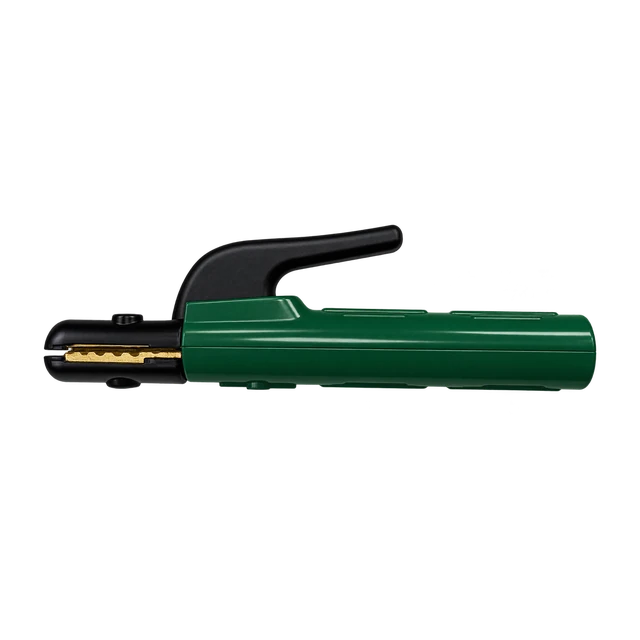
STAVI GREEN ELECTRODE HOLDERS
View details →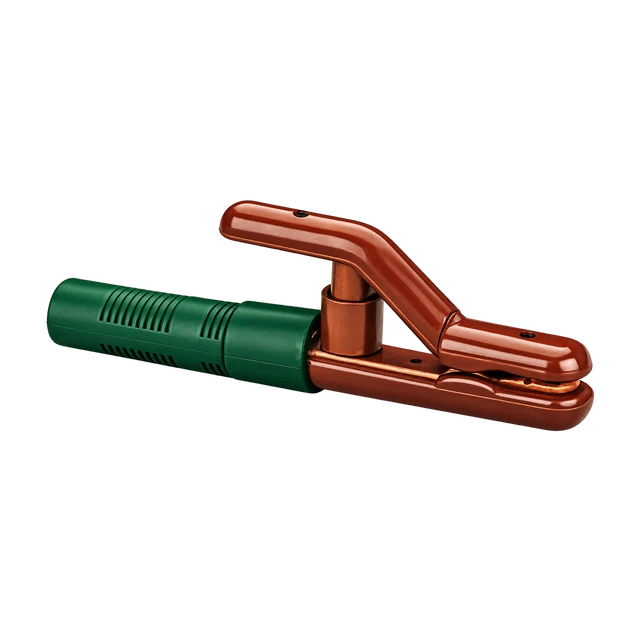
STAVI J ELECTRODE HOLDERS
View details →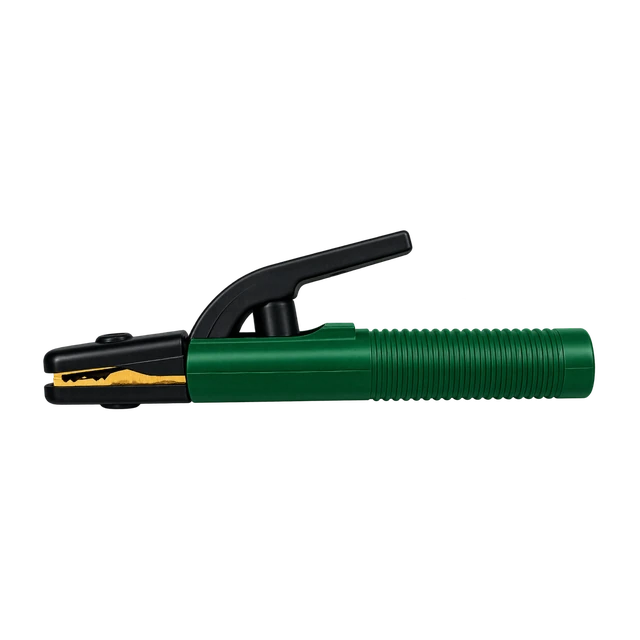
STAVI L ELECTRODE HOLDERS
View details →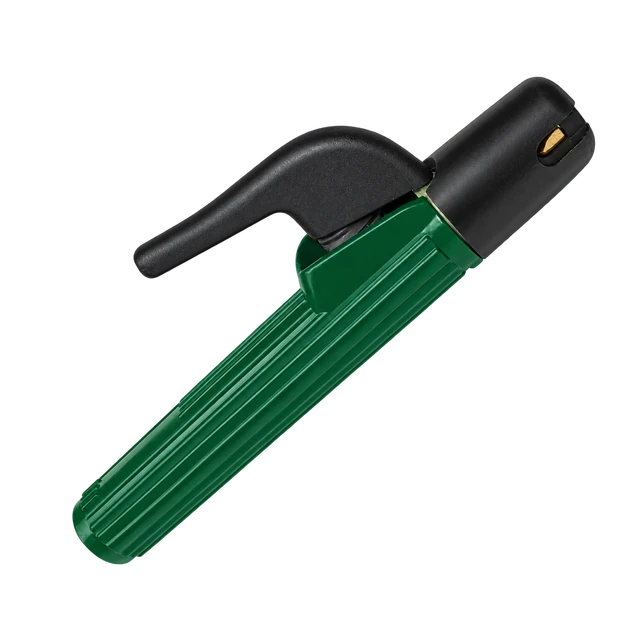
STAVI OPT ELECTRODE HOLDERS
View details →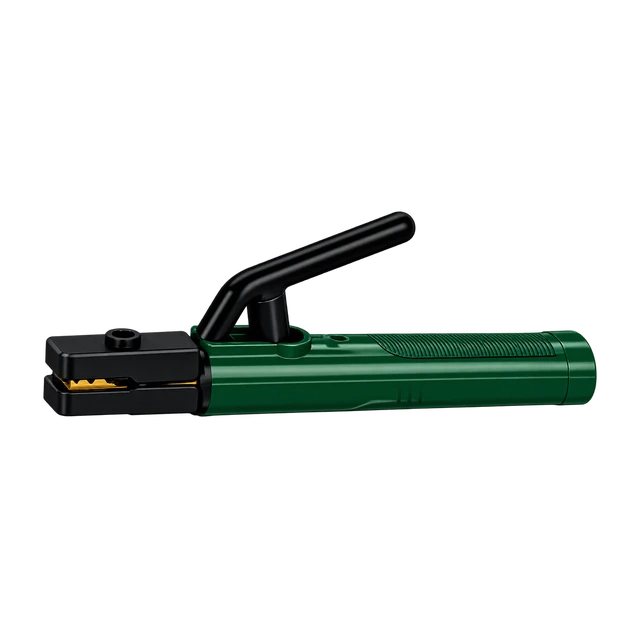
STAVI GERMAN ELECTRODE HOLDERS
View details →
STAVI TWIST ELECTRODE HOLDERS
View details →
STAVI T ELECTRODE HOLDERS
View details →Let’s find your welding solution.
Share your requirements. We’ll help you take the next step.