







CABINET TROLLY
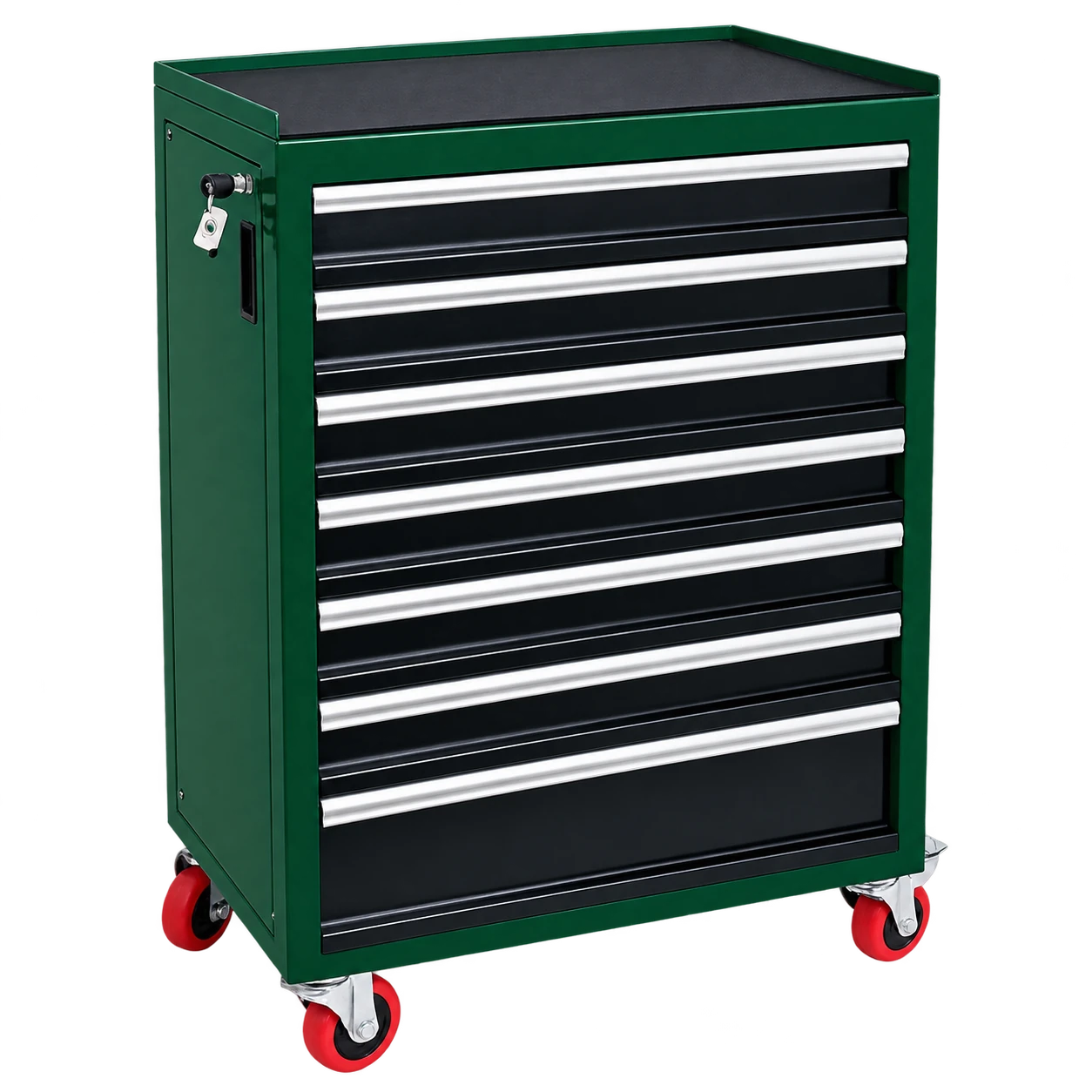
The Stanvac International CABINET TROLLY is a professional tool cabinet — a high-capacity rolling unit with 5 or 7 lockable drawers and an integrated locking system to securely store tools and equipment. It keeps a welder’s consumables, hand tools and accessories organised and moves with the work.
Product details
Key Features and Benefits of Cabinet Trolly
- 5 or 7 Drawer Options: Choose the drawer count to suit the tool kit being stored.
- Integrated Locking System: One lock secures every drawer in the cabinet.
- High Capacity: Holds a full welder’s tool kit, consumables and accessories.
- Rolling Unit: Castors let the cabinet follow the work around the shop.
- Organised Storage: Separate drawers keep electrodes, hand tools and accessories apart.
Specifications of Cabinet Trolly
The table below lists the models available in the Cabinet Trolly range.
| Property | Value |
|---|---|
| Type | Professional Rolling Tool Cabinet |
| Drawers | 5 or 7 lockable drawers |
| Locking | Integrated locking system |
| Mobility | Castor mounted |
Applications of Cabinet Trolly
- Fabrication and welding workshops
- Construction and site erection work
- Plant maintenance and repair operations
- Training centres and tool rooms
Frequently Asked Questions
What is a welding cabinet trolley used for?
Moving and storing welding equipment and consumables around the shop — typically the welding machine, cables, holders, tools and electrodes together as one mobile station. It turns a fixed machine into a portable one and keeps the consumables that go with it in the same place.
Why does electrode storage matter enough to need a cabinet?
Because coated electrodes absorb moisture from the air, and moisture is the source of hydrogen in the weld. On low-hydrogen electrodes — 7018 and the rest of the basic-coated family — moisture pickup defeats the entire reason the electrode was specified, and hydrogen-induced cracking can appear days after the weld is finished. An enclosed cabinet is the minimum protection; controlled-temperature storage is what the procedure usually requires.
Is a cabinet trolley the same as an electrode oven?
No, and the distinction matters. A cabinet stores and protects; an oven holds electrodes at a controlled elevated temperature to keep them dry, and a rebake oven restores electrodes that have already absorbed moisture. Where the welding procedure specifies low-hydrogen practice, an oven or holding quiver is required and a cabinet does not substitute for it.
What load and stability should a welding trolley have?
Enough to carry the machine plus the gas cylinder where one is fitted, without becoming top-heavy on a shop floor that is rarely perfectly flat. Where cylinders are carried, the cylinder restraint is a safety item rather than a convenience — an unrestrained cylinder on a moving trolley is a serious hazard.
Should welding cables be stored on the trolley?
Yes, coiled on hooks rather than dragged and left on the floor. Cables left underfoot are damaged by traffic, hot work and grinding sparks, and cable insulation damage is a real electrical risk as well as a replacement cost. A cable hook on the trolley is the cheapest cable protection available.
How should a welding trolley be maintained?
Check the castors, which take the abuse in a fabrication shop and seize with swarf and spatter. Keep the cabinet dry inside, since the whole purpose of enclosed storage is defeated by a cabinet that has been left open in a humid shop. Inspect any cylinder restraint every time it is used.


Let’s find your welding solution.
Share your requirements. We’ll help you take the next step.