








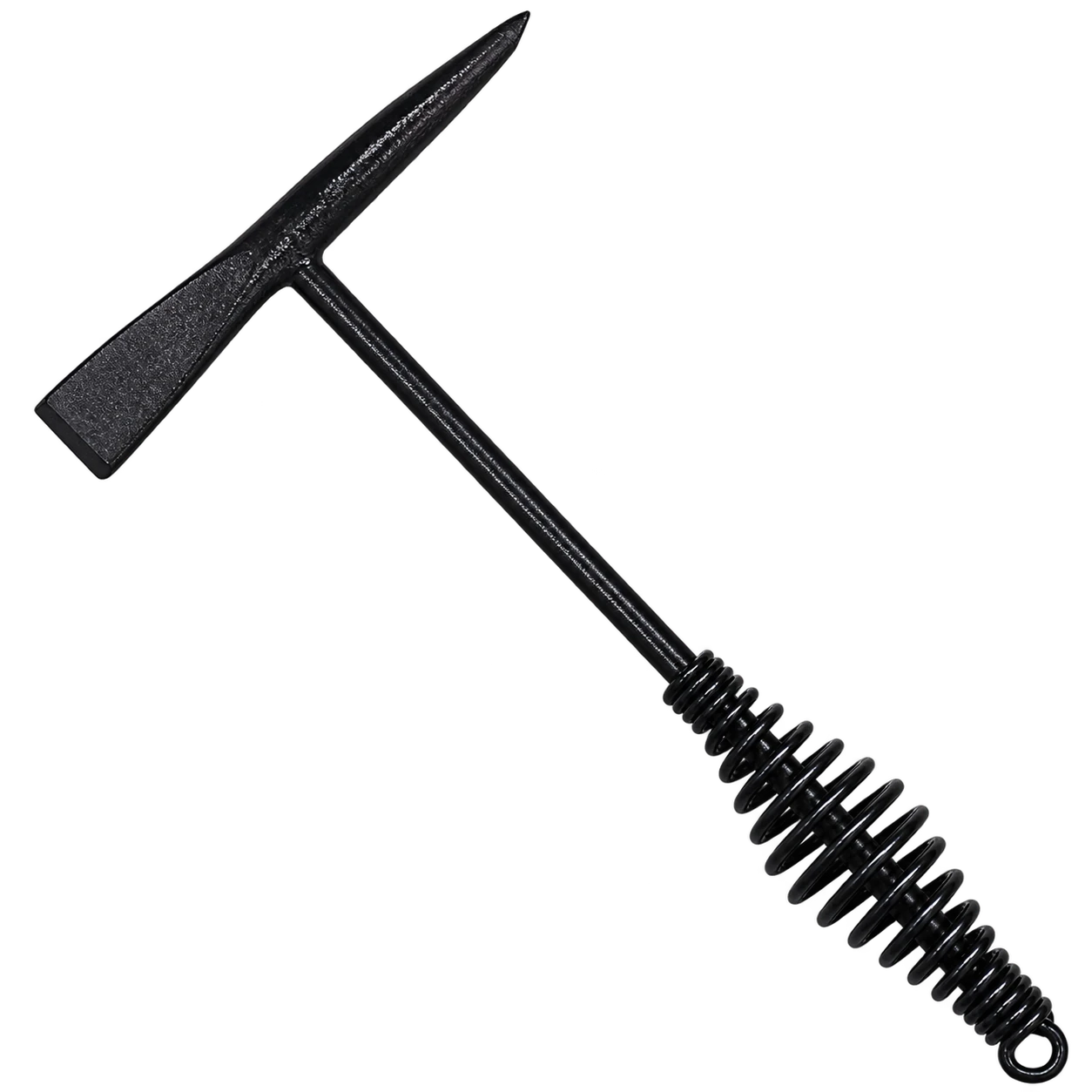
CHIPPING HAMMER
The Stanvac International CHIPPING HAMMER is a cone and chisel chipping hammer with a spring handle, designed to remove slag and spatter from welds. The coiled spring handle absorbs shock, and the cone and chisel ends together handle both fillet roots and flat weld faces.
Product details
Key Features and Benefits of Chipping Hammer
- Cone and Chisel Heads: The cone reaches into fillet roots; the chisel clears flat weld faces.
- Spring Handle: The coiled spring handle absorbs impact shock and reduces hand fatigue.
- 350 Gms Weight: Light enough for continuous use, heavy enough to break slag in one blow.
- 280 mm Length: Gives good reach and leverage without becoming unwieldy.
- Purpose Built for Welders: Made for slag removal rather than adapted from a general-purpose hammer.
Specifications of Chipping Hammer
The table below lists the models available in the Chipping Hammer range.
| Property | Value |
|---|---|
| Weight | 350 Gms |
| Length | 280 mm |
| Head Type | Cone and Chisel |
| Handle | Spring Handle |
Applications of Chipping Hammer
- Fabrication and welding workshops
- Construction and site erection work
- Plant maintenance and repair operations
- Training centres and tool rooms
Frequently Asked Questions
What is a chipping hammer used for?
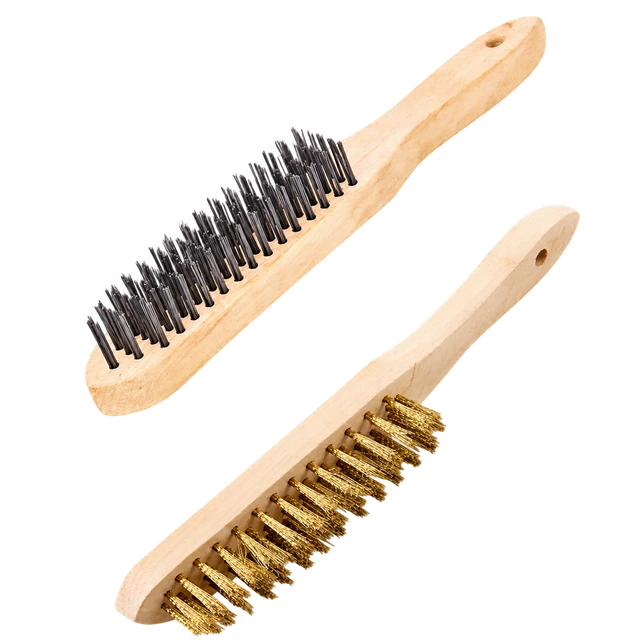
Removing slag from a completed weld pass. In stick and flux-cored welding the flux forms a slag layer over the bead that must come off before the next pass, or it is trapped as an inclusion. The chipping hammer breaks it; the wire brush cleans up what is left.
Why must eye protection be worn when chipping slag?
Because slag leaves the weld as sharp fragments at speed, directly towards the operator's face. Slag in the eye is one of the commonest injuries in fabrication and it is entirely preventable. Safety glasses are the minimum; a face shield is better, and the welding helmet should not be relied on as it is usually up by this point.
Can a chipping hammer damage the weld?
Yes, if it is used aggressively on the weld metal rather than on the slag. Gouge marks in the bead are a defect in their own right and a stress concentration. Work the slag off rather than beating on the weld, and finish with a brush rather than more hammering.
Is a chipping hammer needed for MIG and TIG welding?
Not for solid-wire MIG or TIG, which produce no slag. It is needed for stick, flux-cored and submerged arc. Shops running mixed processes still keep them at every bench because stick work turns up in repair and in positions the wire processes cannot reach.
When should a chipping hammer be replaced?
When the chisel edge has mushroomed or cracked, or the point has blunted to the extent it no longer reaches into weld toes. A mushroomed striking or working edge can shed fragments under impact, which is a safety issue rather than a performance one.
Let’s find your welding solution.
Share your requirements. We’ll help you take the next step.